Cattleman Turned Beekeeper
Sep 15, 2026
Sara Clausen
Director of Communications
WE ALL KNOW THAT IOWA leads the nation in corn, pigs and eggs, but in truth, our state is an all-around agricultural Mecca. Our incredible soil and natural resources serve as a powerhouse. Just walk through the John Deere Agriculture Building at the Iowa State Fair and you’ll see the diversity of our farmers.
Some of them are even serving up a sweet, golden treat!
September is National Honey Month, and it marks the end of harvest season for the beekeepers in our state. Since Iowa produces more than 1,259,000 pounds of honey each year, it’s worth a big celebration. While there are very few commercial beekeepers around the state, we all know someone with hives or have a bee hobbyist as a neighbor. Still, it’s not every day you hear of a cattleman shifting from cows to bees. But Bill Couser of Nevada has done just that. “A few years ago, I knew it was time for a change,” said Bill. “I was ready to entrust the next generation to farm and raise the cattle.”
Bill’s son, Tim, had taken their row crop operation to a whole new level with advanced technology and innovative solutions. It was time to find someone to take on the feedlot. Bill met southern Iowa farmer, Drew Johnston, while he was going to Iowa State University. He ended up selling Drew and his wife, Morgan, his feedlot on contract while continuing to serve as a consultant when needed.
“After I signed the feedlot contract, I immediately thought, What’s next?” said Bill. “Though I don’t spend much time on social media, I began to scroll Facebook and saw a post for a woman offering a free beehive. Before I knew it, I had three hives!”
Learning to keep bees can be compared to raising cattle—it too requires care and feeding, and sometimes there is failure. But in the end, you’re still responsible for protecting animals and feeding people.
This spring, Bill split his boxes and now has nearly 40 hives. Since each hive can have up to 50,000 bees to one queen, he may produce 5–12 gallons of honey per hive. Enter a new challenge: What to do with all that honey?
“The first couple of years, I gave away the honey,” said Bill. “But this spring, I decided I wanted to find a way to give back to kids, so I developed some partnerships.”
Couser Cattle Company Natural Prairie Honey is now sold through four main outlets: the Nevada American Legion, Chocolaterie Stam Ames, Main Street Nevada and the Nevada FFA chapter. All honey sales directly fund scholarships for kids.
“My goal is to give back to a community that’s supported my family for more than 124 years,” said Bill. “I just want to support kids. After all, they’re going to run this country!”
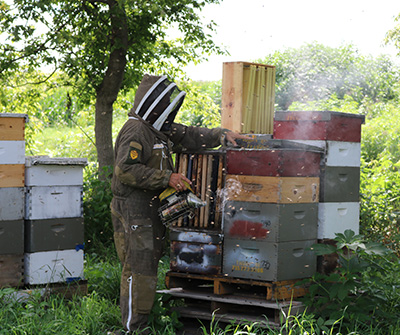
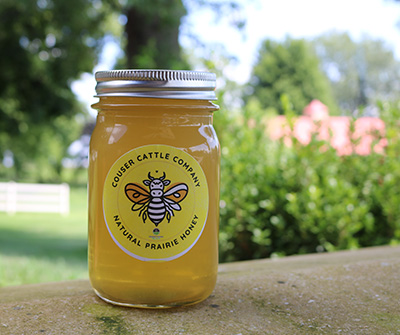
Pictured: A few years ago, Bill Couser of Nevada swapped being a cattleman for keeping bees. Today, he has nearly 40 beehives. Bill’s niece designed a very special label for his jarred honey, connecting family history with the future.
Director of Communications
WE ALL KNOW THAT IOWA leads the nation in corn, pigs and eggs, but in truth, our state is an all-around agricultural Mecca. Our incredible soil and natural resources serve as a powerhouse. Just walk through the John Deere Agriculture Building at the Iowa State Fair and you’ll see the diversity of our farmers.
Some of them are even serving up a sweet, golden treat!
September is National Honey Month, and it marks the end of harvest season for the beekeepers in our state. Since Iowa produces more than 1,259,000 pounds of honey each year, it’s worth a big celebration. While there are very few commercial beekeepers around the state, we all know someone with hives or have a bee hobbyist as a neighbor. Still, it’s not every day you hear of a cattleman shifting from cows to bees. But Bill Couser of Nevada has done just that. “A few years ago, I knew it was time for a change,” said Bill. “I was ready to entrust the next generation to farm and raise the cattle.”
Bill’s son, Tim, had taken their row crop operation to a whole new level with advanced technology and innovative solutions. It was time to find someone to take on the feedlot. Bill met southern Iowa farmer, Drew Johnston, while he was going to Iowa State University. He ended up selling Drew and his wife, Morgan, his feedlot on contract while continuing to serve as a consultant when needed.
“After I signed the feedlot contract, I immediately thought, What’s next?” said Bill. “Though I don’t spend much time on social media, I began to scroll Facebook and saw a post for a woman offering a free beehive. Before I knew it, I had three hives!”
Learning to keep bees can be compared to raising cattle—it too requires care and feeding, and sometimes there is failure. But in the end, you’re still responsible for protecting animals and feeding people.
This spring, Bill split his boxes and now has nearly 40 hives. Since each hive can have up to 50,000 bees to one queen, he may produce 5–12 gallons of honey per hive. Enter a new challenge: What to do with all that honey?
“The first couple of years, I gave away the honey,” said Bill. “But this spring, I decided I wanted to find a way to give back to kids, so I developed some partnerships.”
Couser Cattle Company Natural Prairie Honey is now sold through four main outlets: the Nevada American Legion, Chocolaterie Stam Ames, Main Street Nevada and the Nevada FFA chapter. All honey sales directly fund scholarships for kids.
“My goal is to give back to a community that’s supported my family for more than 124 years,” said Bill. “I just want to support kids. After all, they’re going to run this country!”
Pictured: A few years ago, Bill Couser of Nevada swapped being a cattleman for keeping bees. Today, he has nearly 40 beehives. Bill’s niece designed a very special label for his jarred honey, connecting family history with the future.